






IPhEB 2026: Where Eastern European Pharma Procurement Actually Happens
Every year, Saint Petersburg quietly becomes one of the most commercially consequential cities in pharmaceutical sourcing. IPhEB Russia — the International Pharmaceutical, Engineering and Biotech Exhibition — draws a buyer profile that few Western-centric tradeshows can match: regional distributors serving CIS markets, import-licensed wholesalers, hospital formulary managers, and emerging biotech startups building their own finished-dose pipelines. For any peptide API manufacturer serious about the Russian and CIS corridor, this show is not optional — it is the entry point.
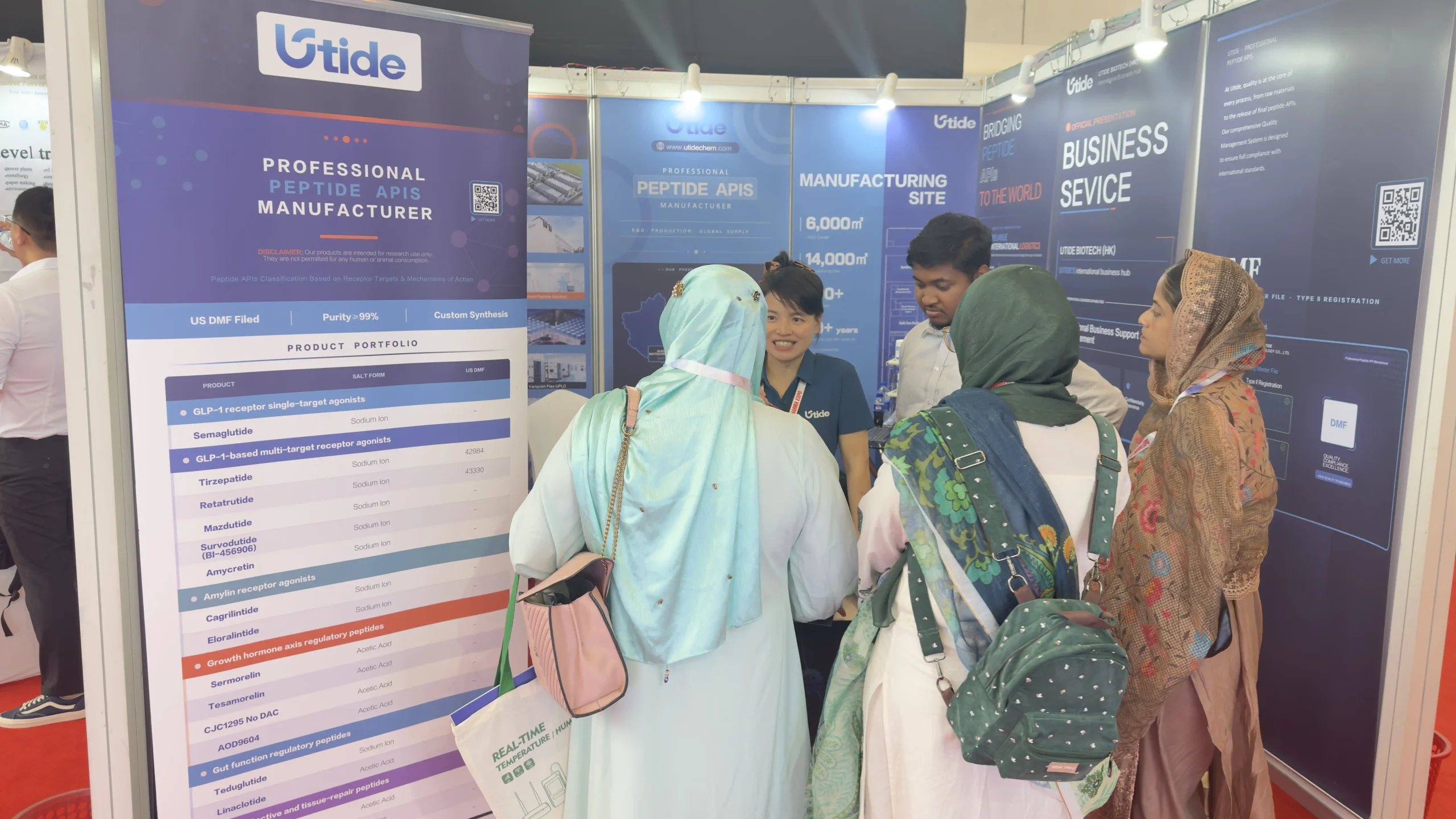
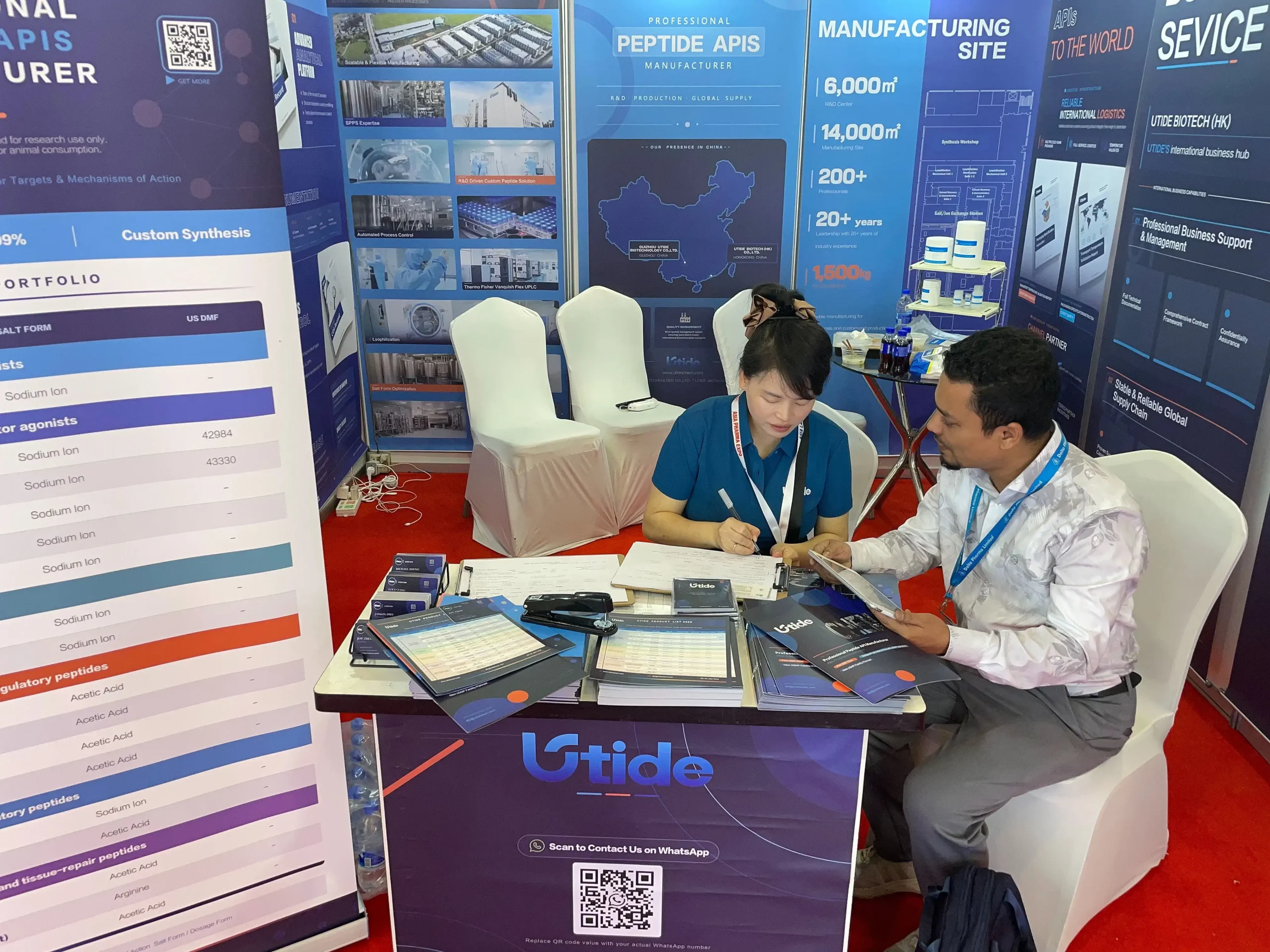
Utidechem (overseas commercial entity: UTIDE BIOTECH (HK) CO., LIMITED) will be exhibiting at IPhEB Russia 2026 in Saint Petersburg. This article is intended not as a press release but as a practical briefing for procurement teams evaluating GLP-1 API and research-grade peptide suppliers ahead of face-to-face meetings.
Who We Are: A Dual-Entity Structure Designed for International Trade
Utidechem operates through two complementary legal entities — a structure that addresses the most common friction points in cross-border pharma grade peptide procurement: contract jurisdiction, foreign exchange, and logistics reliability.
| UTIDE BIOTECH (HK) CO., LIMITED | Guizhou Utide Biotechnology Co., Ltd. | |
| Role | Overseas commercial entity | Manufacturing entity |
| Location | Hong Kong | Zunyi, Guizhou, China |
| Function | Contract signing, FX settlement, logistics coordination | cGMP-oriented peptide production, QC, R&D |
| Facility | — | 20,000 m² plant, 200+ staff |
| Experience | — | Core team with 20+ years in peptide drug development |
The Hong Kong entity handles all commercial documentation — purchase agreements, invoices, SWIFT settlements — while the Guizhou facility focuses exclusively on synthesis quality and output consistency. This separation is deliberate: it keeps operational risk siloed and gives buyers a commercially predictable counterpart regardless of where the chemistry is happening.
The Real Challenge in Long-Chain GLP-1 Peptide Synthesis — and What We Do About It
Most pre-show content from peptide API manufacturers gravitates toward the same talking points: HPLC purity, COA documentation, cold-chain shipping. Those things matter. But they describe the output, not the problem.
The actual challenge in manufacturing semaglutide peptide, tirzepatide, or retatrutide via Fmoc solid-phase peptide synthesis (Fmoc-SPPS) is that long-chain sequences — often 30+ amino acid residues with fatty acid side-chain modifications — accumulate synthesis errors in ways that are non-linear and difficult to detect until late-stage purification. Three failure modes dominate:
- Incomplete coupling: Each coupling cycle carries a small deletion probability; over 39 residues (as in semaglutide), even 99.5% coupling efficiency compounds to roughly 82% full-length sequence before purification. At scale, this means large quantities of deletion impurities that co-elute with the target.
- Premature deprotection: Labile protecting groups — particularly on lysine side chains where C18 fatty acid conjugation occurs in semaglutide — can migrate or cleave under suboptimal resin swelling conditions, generating structurally altered analogues that are immunologically distinct from the target.
- Racemization at His and Cys: Under prolonged activation conditions, histidine and cysteine residues are especially prone to epimerization, introducing diastereomeric impurities that standard reverse-phase HPLC often fails to resolve without orthogonal methods.
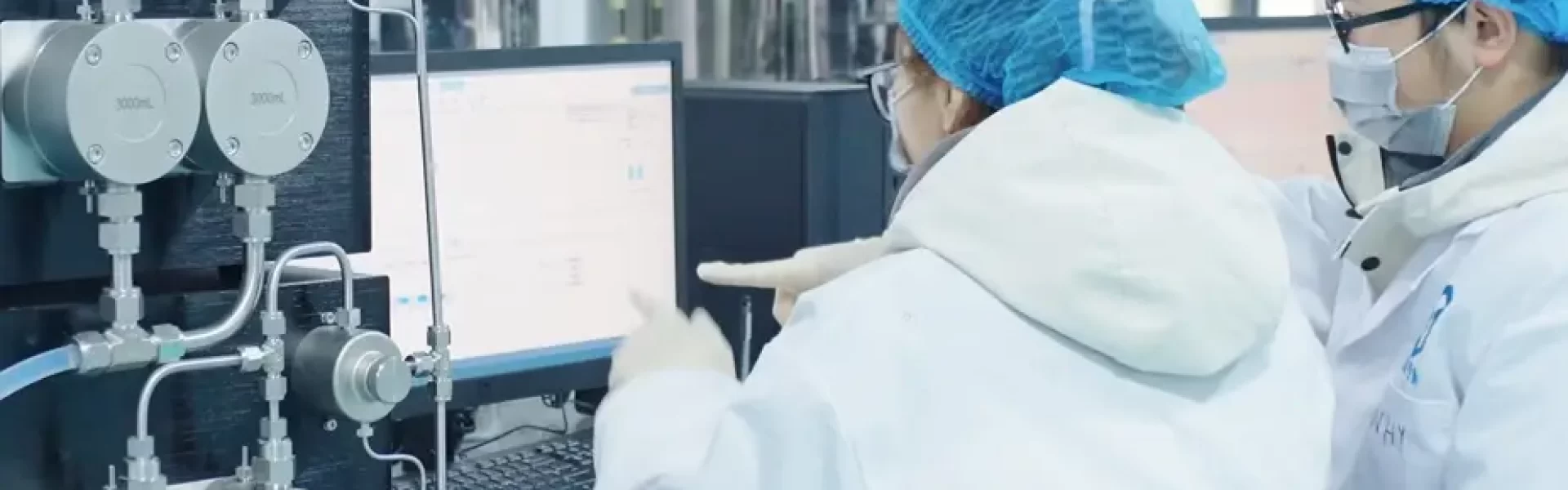
Utidechem’s process control response to these failure modes is grounded in continuous monitoring rather than batch-end inspection. Real-time Kaiser and TNBS tests are performed at each coupling step to detect sub-threshold reactions before they propagate. Preparative HPLC fractionation is performed across multiple gradient conditions to target both hydrophobic and charge-variant impurities. Final identity confirmation uses high-resolution mass spectrometry (HRMS) — not just MALDI or low-resolution ESI — to verify molecular formula and detect low-abundance structural analogs at sub-0.1% levels.
This approach does not eliminate impurities; no synthesis does. What it does is shift impurity detection from the QC lab to the manufacturing line, where intervention is still possible. The result is more consistent lot-to-lot purity profiles for GLP-1 API — which matters most to buyers who are scaling formulation development and cannot absorb batch variability.
Core Product Portfolio
GLP-1 / GIP Receptor Agonists (Metabolic Pipeline):
- Semaglutide (CAS 910463-68-2) — GLP-1 receptor agonist; 39 AA with C18 fatty diacid conjugation; primary application in T2D and obesity pharmacotherapy
- Tirzepatide (CAS 2023788-19-2) — dual GLP-1/GIP agonist; 39 AA; used in weight management and metabolic research
- Retatrutide (CAS 2381089-83-2) — triple agonist (GLP-1/GIP/glucagon); emerging pipeline molecule
- Mazdutide (CAS 2259884-03-0) — GLP-1/glucagon dual agonist; active in clinical development in Asia
Regenerative & Cytoprotective Peptides:
- BPC-157 arginine salt (CAS 137525-51-0) / acetate (CAS 1628202-19-6) — body protection compound; gastrointestinal and musculoskeletal research applications
- TB-500 (CAS 885340-08-9) — thymosin beta-4 fragment; tissue repair and anti-inflammatory research
Growth Hormone Axis:
- Sermorelin (CAS 86168-78-7) — GHRH analogue; HGH secretagogue applications
- Tesamorelin (CAS 218949-48-5) — stabilized GHRH analogue; used in HIV-associated lipodystrophy and anti-aging research
Three Procurement Scenarios — Composite Case Studies
The following cases are composites drawn from real commercial patterns, anonymized by design.
Case 1: A Central European distributor scaling from research to commercial volumes
A distributor serving hospital pharmacies across Central Europe had sourced small quantities of semaglutide peptide from three different suppliers over 18 months. The problem was not availability — it was lot-to-lot purity variance that caused their formulation partner to reject two batches due to HPLC profile inconsistency. They needed a peptide API manufacturer that could demonstrate process stability across a minimum of three consecutive lots before committing to a volume contract. We provided bridging lot documentation with overlaid HPLC chromatograms and HRMS confirmation for each lot. After review, they placed a 12-month frame agreement covering quarterly deliveries with defined purity specifications.
Case 2: A CIS importer navigating documentation requirements for customs clearance
A licensed importer in a CIS market was experiencing repeated customs delays on pharma grade peptides due to inconsistent documentation — specifically, COAs that lacked sufficient analytical detail to satisfy local inspectorate review. Their existing supplier provided single-method HPLC data only. We supplemented standard COA packages with complete analytical dossiers including method validation summaries, reference standard certificates, and country-specific declaration templates. Customs clearance time dropped substantially, and the importer was able to meet formulary submission deadlines for two regional tenders.
Case 3: An early-stage biotech needing flexible order quantities during IND-enabling studies
A startup biotech conducting IND-enabling studies on a GLP-1 API-based combination product needed quantities too small for most manufacturers to prioritize — but with documentation standards equivalent to commercial supply. They required full analytical packages, including residual solvent testing and elemental impurity screening, on orders that most suppliers would classify as samples. We accommodated their phased ordering pattern with tiered MOQs and maintained full documentation compliance throughout. When they progressed to Phase I manufacturing, the analytical continuity from early-stage sourcing became part of their regulatory submission package.
Supplier Scorecard: How Utidechem Benchmarks Against Common Procurement Criteria
Procurement teams evaluating peptide API suppliers across CIS and Eastern European markets typically apply six operational criteria. Below is our self-assessed benchmarking:
| Evaluation Criterion | Utidechem Score |
| Purity Consistency | 9.2 |
| Documentation Completeness | 9.0 |
| MOQ Flexibility | 8.5 |
| Lead Time Reliability | 8.8 |
| Technical Support | 9.1 |
| Price Stability | 8.7 |
| Overall Score | 8.9 / 10 |
Scores reflect internal assessment benchmarked against buyer feedback and industry standards. 10 = exceptional, 1 = poor.
Frequently Asked Questions
Q1: What quality standards do your peptides meet?
All products are manufactured at our Guizhou facility under cGMP-oriented conditions. The facility is designed and operated to cGMP principles; formal GMP certification is in progress. Standard analytical package includes HPLC purity (≥98% or per specification), HRMS identity confirmation, water content (Karl Fischer), residual solvent testing (ICH Q3C), and COA with retained reference standards.
Q2: What are your MOQ and lead times?
MOQ varies by product and grade. For catalog semaglutide peptide and tirzepatide, we accommodate orders from gram-scale for R&D to multi-hundred gram for early commercial supply. Standard lead time for in-stock material is 7–14 business days post-order confirmation. Custom synthesis lead times are product-dependent and quoted individually.
Q3: How are contracts structured and how is payment handled?
All contracts are executed with UTIDE BIOTECH (HK) CO., LIMITED as the counterpart. We support USD and EUR settlements via SWIFT. Incoterms are negotiated per order; DDP to select destinations is available for regular commercial partners.
Q4: Can you support regulatory filing documentation?
Yes. We provide DMF-supportive documentation packages including manufacturing process descriptions, analytical method summaries, impurity profiles, and stability data summaries. For markets requiring country-specific formats (e.g., EEU registration dossiers), we work with buyers’ regulatory teams to align documentation to local requirements.
Q5: Will technical staff be available at the booth during IPhEB?
Yes. Our exhibition team at IPhEB Russia 2026 includes both commercial and technical representatives. Synthesis process questions, analytical method discussions, and regulatory documentation reviews can all be addressed on-site. For complex technical queries, we can also arrange follow-up calls with our Guizhou R&D team within 48 hours of the show.
Find Us at IPhEB Russia 2026 — Saint Petersburg
If your procurement pipeline includes GLP-1 APIs, research-grade peptide APIs, or analytical-grade reference materials for CIS distribution, we invite you to visit the Utidechem booth at IPhEB Russia 2026. Bring your current specification requirements, supplier comparison matrices, or compliance questions — our team is prepared for substantive technical and commercial conversations, not just brochure handoffs.
To schedule a meeting ahead of the show or to request a product datasheet, visit us at www.utidechem.cn or contact our business development team through the website inquiry form.